


Kenacort-A Orabase 0.1% Oral Paste – Complete Guide: Uses, How to Apply, Side Effects & Mouth Ulcer Relief
Key Facts at a Glance
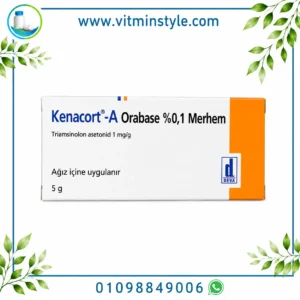
| Active Ingredient | Triamcinolone Acetonide 1 mg/g (0.1%) |
|---|---|
| Brand | DEVA Pharmaceuticals – Turkey |
| Pack Size | 5 g tube |
| Form | Oral Paste (Orabase) – Topical |
| Primary Use | Mouth ulcers, aphthous ulcers, oral inflammation |
| Drug Class | Topical Corticosteroid |
| Route | Intraoral topical application only |
| Storage | 15–25°C, away from light and moisture |
| Country of Origin | Turkey |
| Barcode | 8699521160035 |
Table of Contents
- What Is Kenacort-A Orabase 0.1%?
- How Does It Work?
- Main Benefits
- Real Use Cases
- Who Is It Best For?
- Who Should Avoid It?
- How to Apply Correctly
- Best Time to Apply
- Expected Results Timeline
- Common Mistakes
- Myths vs Facts
- Drug Interactions
- Contraindications
- Required Tests If Needed
- What to Eat With It
- Effect on Other Medications
- When to See a Doctor
- Vitamin Style Expert Tip
- FAQ
- Conclusion
- References
- Medical Disclaimer
Introduction
Mouth ulcers are among the most common and painful oral conditions — small but intensely uncomfortable lesions that can make eating, drinking, and even speaking difficult. Kenacort-A Orabase 0.1% provides targeted topical corticosteroid relief directly at the site of the ulcer, using a specialized Orabase vehicle that adheres to the wet oral mucosa and keeps the active ingredient in place.
This guide covers everything you need to know: how it works, how to use it correctly, who should avoid it, and when to seek medical advice.
What Is Kenacort-A Orabase 0.1%?
Kenacort-A Orabase 0.1% is a topical corticosteroid oral paste manufactured by DEVA Pharmaceuticals in Turkey. Its active ingredient is Triamcinolone Acetonide at a concentration of 1 mg per gram (0.1%). The product comes in a 5g tube and is specifically formulated for intraoral use — meaning it is designed to be applied inside the mouth, not on the skin.
The Orabase base (a blend of pectin, gelatin, and sodium carboxymethylcellulose in a polyethylene-mineral oil base) is what makes this formulation unique: it creates a protective, adhesive film over oral ulcers that stays in contact with the tissue even in the moist oral environment.
How Does It Work?
Triamcinolone Acetonide is a synthetic fluorinated corticosteroid with potent anti-inflammatory, antipruritic, and vasoconstrictive properties. When applied to an oral ulcer, it suppresses the local inflammatory response by inhibiting the production of pro-inflammatory cytokines, reducing vasodilation, and decreasing vascular permeability in the affected tissue.
The Orabase vehicle forms a bioadhesive protective layer over the ulcer surface, which shields the wound from irritation while ensuring prolonged contact of the corticosteroid with the tissue — increasing its therapeutic effect compared to standard oral gels.
Main Benefits
- Rapid reduction of mouth ulcer pain and inflammation
- Bioadhesive Orabase formulation stays on wet oral mucosa
- Protective film shields ulcer from food and drink irritation
- Helps accelerate healing of aphthous ulcers and oral lesions
- Well-established corticosteroid with decades of oral use
- Manufactured by DEVA Pharmaceuticals to Turkish pharmaceutical standards
- Convenient 5g tube — easy to apply precisely
Real Use Cases
- Aphthous ulcers (canker sores): The most common use — applied to painful ulcers on the inner cheeks, lips, or tongue to reduce pain and speed healing.
- Traumatic oral ulcers: Ulcers caused by biting the cheek, sharp teeth, or dental appliances.
- Oral lichen planus: Used under medical supervision to manage painful erosive lesions.
- Inflammatory oral mucosa conditions: General oral mucosal inflammation responding to topical corticosteroid therapy.
Who Is It Best For?
- Adults and adolescents with recurrent aphthous ulcers (canker sores)
- Patients with traumatic oral ulcers from dental devices or injury
- Patients with oral lichen planus under medical supervision
- Anyone with painful oral mucosal inflammation not responding to simple analgesics
Who Should Avoid It?
- Patients with known hypersensitivity to triamcinolone acetonide or any component of the paste
- Patients with oral fungal infections (e.g., oral candidiasis / thrush) — corticosteroids can worsen fungal infections
- Patients with oral viral infections (e.g., herpes simplex, cold sores) — can cause viral spread
- Children under 12 years (without specific medical supervision)
- Pregnant or breastfeeding women (consult a doctor before use)
- Patients with tuberculosis of the oral cavity
How to Apply Correctly
Proper application technique is essential for Kenacort-A Orabase to work effectively:
- Dry the ulcer area gently with a clean tissue or cotton swab before applying
- Apply a small amount (about 6mm / ¼ inch) of paste to the ulcer — do not rub in
- Press lightly to allow the Orabase to adhere — do not spread or massage
- Apply 2–3 times daily after meals and at bedtime
- Do not eat or drink for at least 30 minutes after application
- Do not cover the entire mouth area — apply only to the affected ulcer
- Wash hands before and after applying
Do not swallow the paste intentionally. Use the minimum effective amount.
Best Time to Apply
The optimal times for application are after breakfast, after lunch, after dinner, and immediately before bedtime. The bedtime application is particularly important as saliva flow decreases during sleep, allowing the paste to adhere longer and the corticosteroid to act for an extended period without being washed away.
Expected Results Timeline
| Timeframe | Expected Outcome |
|---|---|
| Within 24–48 hours | Noticeable reduction in pain and soreness |
| 2–3 days | Significant decrease in ulcer size and inflammation |
| 4–7 days | Most minor ulcers fully healed |
| 7–14 days | Larger or more stubborn ulcers should be resolving — consult doctor if not |
Do not use for more than 2 weeks continuously without medical advice.
Common Mistakes to Avoid
- Rubbing or massaging the paste into the ulcer — this destroys the protective film
- Applying to a wet surface without drying first — reduces adhesion significantly
- Using too much paste — a small amount is sufficient and more effective
- Eating or drinking immediately after application — removes the paste before it can work
- Using for more than 2 weeks continuously without medical supervision
- Applying to areas with oral thrush or cold sores — can worsen the infection
- Using on skin — this product is for intraoral use only
Myths vs Facts
| Myth | Fact |
|---|---|
| More paste = faster healing | A thin application (6mm) is optimal — excess paste does not improve results |
| It can be used for any mouth sore | It should NOT be used for viral (herpes) or fungal ulcers — only inflammatory/aphthous ulcers |
| It is safe to swallow the paste | Intentional ingestion should be avoided — systemic corticosteroid absorption is possible with excessive use |
| It cures the cause of mouth ulcers | It manages symptoms only — recurrent ulcers require investigation of underlying causes |
Drug Interactions
As a topical product used inside the mouth, systemic absorption of triamcinolone acetonide from Kenacort-A Orabase is generally low with correct use. However, the following considerations apply:
| Drug / Class | Interaction Concern |
|---|---|
| Systemic corticosteroids | Combined use increases total corticosteroid load – inform your doctor |
| Antifungals (nystatin, fluconazole) | If oral candidiasis develops, corticosteroid use should be reviewed |
| Antidiabetic medications | Prolonged/excessive topical corticosteroid use may affect blood glucose in diabetic patients |
| Immunosuppressants | Combined immunosuppression increases infection risk in the oral cavity |
Contraindications
- Known hypersensitivity to triamcinolone acetonide or Orabase excipients
- Oral fungal infections (candidiasis / thrush)
- Oral viral infections (herpes simplex, varicella)
- Oral tuberculosis
- Children under 12 without specific medical guidance
- Pregnancy and breastfeeding (unless clearly necessary under medical supervision)
Required Tests If Needed
For typical short-term use of Kenacort-A Orabase, no specific laboratory tests are required. However, if the product is used long-term or for recurrent ulcers, the following may be considered by your doctor:
- Oral swab culture – to rule out fungal (candida) or bacterial superinfection
- Blood glucose monitoring – especially in diabetic patients using the product frequently
- Complete blood count (CBC) – for patients on combined corticosteroid therapy
- Investigation for underlying causes – recurrent aphthous ulcers may indicate vitamin B12, iron, or folate deficiency, celiac disease, or inflammatory bowel disease
What to Eat (and Avoid) While Using Kenacort-A Orabase
Diet can significantly impact mouth ulcer healing speed and pain levels:
- Eat soft, bland foods – yogurt, mashed potatoes, oatmeal, soups, smoothies
- Increase vitamin B12 and folate intake – eggs, leafy greens, fortified cereals (deficiency is a common ulcer trigger)
- Eat iron-rich foods – legumes, fortified foods (iron deficiency is linked to recurrent aphthous ulcers)
- Avoid spicy, acidic, hard, or crunchy foods while ulcers are active
- Avoid citrus fruits, tomatoes, vinegar-based foods – these directly irritate ulcers
- Avoid alcohol-containing mouthwashes – these worsen oral mucosal irritation
- Wait at least 30 minutes after applying the paste before eating or drinking
Effect on Other Medications
At standard topical doses and with correct short-term use, Kenacort-A Orabase has minimal systemic effects. However:
- Excessive or prolonged use can result in measurable systemic corticosteroid absorption — particularly relevant for patients already on systemic steroids
- May transiently reduce the efficacy of local antifungals if oral candidiasis develops
- Does not significantly interact with most oral medications when used as directed
- Inform your dentist and doctor about all medications you are using before applying
When to See a Doctor
Seek medical advice if:
- Ulcers do not improve after 7–10 days of consistent treatment
- Ulcers are unusually large (greater than 1 cm), deep, or painful
- You develop white patches, creamy deposits, or a burning sensation (possible oral thrush from corticosteroid use)
- Ulcers recur frequently (more than 3–4 times per year) — underlying causes should be investigated
- You experience fever, swollen lymph nodes, or difficulty swallowing alongside the ulcers
- Ulcers appear in unusual locations or have an irregular border — these may require biopsy to rule out serious conditions
- You are pregnant or breastfeeding and need treatment for mouth ulcers
Vitamin Style Expert Tip
Frequently Asked Questions
How long does it take for Kenacort-A Orabase to work?
Most patients notice a reduction in pain within 24–48 hours of starting treatment. Visible healing of the ulcer typically occurs within 3–7 days with consistent application.
Can I eat after applying Kenacort-A Orabase?
No — wait at least 30 minutes after applying the paste before eating or drinking. This allows the Orabase to adhere properly and the corticosteroid to begin working.
Can I use Kenacort-A Orabase for cold sores?
No. Cold sores are caused by the herpes simplex virus. Using a corticosteroid on a viral infection can suppress immune response and worsen the infection. Kenacort-A Orabase is for aphthous (non-viral) ulcers only.
How many times a day should I apply it?
Apply 2–3 times daily after meals and at bedtime. The bedtime application is the most important as it provides prolonged overnight contact with the ulcer.
Is Kenacort-A Orabase safe for long-term use?
It is not recommended for continuous use beyond 2 weeks without medical supervision. Prolonged topical corticosteroid use in the mouth can increase the risk of oral candidiasis (thrush) and may cause measurable systemic absorption.
Can children use Kenacort-A Orabase?
It should be used with caution in children under 12 and only under medical supervision. The risk of systemic absorption is relatively higher in young children.
What if the ulcer gets worse or new ulcers appear?
Stop using the product and consult a doctor. Worsening or new ulcers may indicate a secondary infection (fungal or bacterial) or a condition requiring a different treatment approach.
Conclusion
Kenacort-A Orabase 0.1% is a clinically established topical corticosteroid paste that provides effective, targeted relief for mouth ulcers and oral inflammation. Its unique Orabase bioadhesive base makes it one of the most practical formulations for intraoral use — keeping the active triamcinolone acetonide in contact with the ulcer surface for sustained therapeutic benefit.
For best results, apply correctly using the press-and-adhere technique, particularly at bedtime, and combine with a soft diet and good oral hygiene. Recurrent ulcers should be investigated for underlying nutritional or systemic causes.
Available at Vitamin Style — your trusted source for original imported pharmaceutical products in Egypt.
Trusted References
- Drugs.com – Triamcinolone Acetonide Dental Paste
- NIH – Management of Recurrent Aphthous Stomatitis
- Mayo Clinic – Canker Sore Treatment
- American Dental Association – Canker Sores
- UpToDate – Aphthous Ulcers (Canker Sores)


Reviews
There are no reviews yet.