

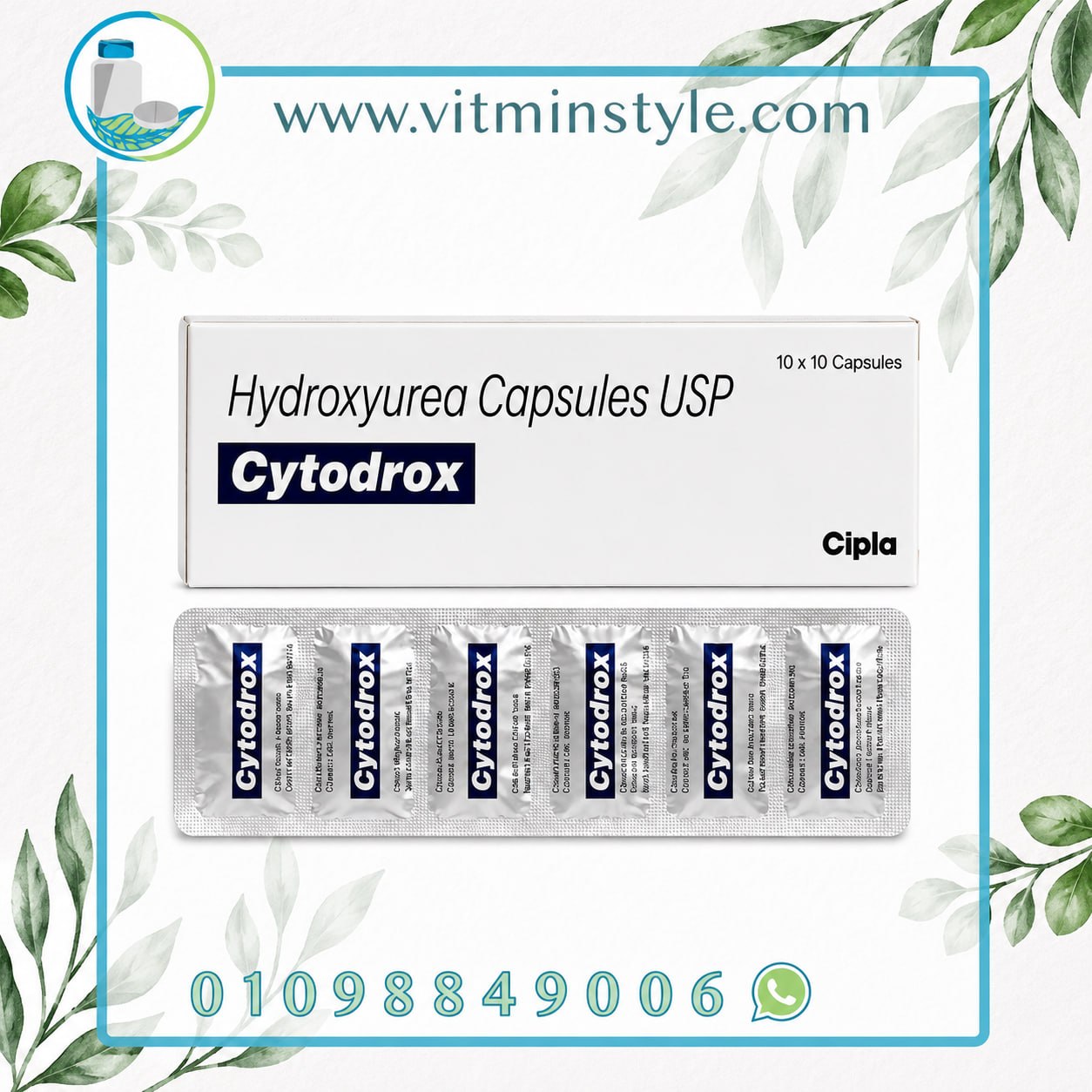


Cytodrox Hydroxyurea Capsules USP – Cipla Antineoplastic Agent for CML, Sickle Cell Disease & Polycythemia Vera
Key Facts at a Glance
| Feature | Detail |
|---|---|
| Drug Name | Cytodrox (Hydroxyurea Capsules USP) |
| Drug Class | Antineoplastic – Ribonucleotide reductase inhibitor |
| Active Ingredient | Hydroxyurea (Hydroxycarbamide) USP |
| Pack Size | 100 capsules (10 blister strips × 10 capsules) |
| Standard | USP (United States Pharmacopeia) |
| Primary Indications | Chronic myeloid leukemia (CML), sickle cell disease, polycythemia vera, essential thrombocythemia |
| Manufacturer | Cipla Ltd. – India |
| Prescription Status | Specialist prescription only – oncologist/hematologist |
| Key Safety | Myelosuppression, teratogenicity, mutagenicity – requires regular CBC monitoring |
Table of Contents
- What Is Cytodrox Hydroxyurea?
- Mechanism of Action
- Medical Indications
- Clinical Use Cases
- Who Is It Prescribed For?
- Who Should NOT Use It?
- How to Use Correctly
- Dosing Timing
- Expected Clinical Timeline
- Critical Safety Mistakes to Avoid
- Myths vs Facts
- Drug Interactions
- Contraindications
- Required Tests & Monitoring
- What to Consider During Treatment
- Effect on Other Medications
- When To Contact Your Oncologist Urgently
- Clinical Tip
- FAQ
- Conclusion
- Medical Disclaimer
- Trusted Sources
Introduction
Hydroxyurea (hydroxycarbamide) is a well-established cytoreductive agent with over five decades of clinical use. Originally developed as an anticancer agent, its unique mechanism of action — inhibition of ribonucleotide reductase — makes it valuable across both oncological and hematological conditions. Cipla’s Cytodrox brand delivers this active substance to USP (United States Pharmacopeia) standards in a convenient 100-capsule (10×10) format suitable for ongoing specialist-directed therapy.
What Is Cytodrox Hydroxyurea?
Cytodrox is the brand name for Hydroxyurea Capsules USP manufactured by Cipla Ltd. — one of the world’s largest generic pharmaceutical companies, headquartered in Mumbai, India. Hydroxyurea (also known as hydroxycarbamide) is a small molecule antineoplastic agent. The USP designation confirms the formulation meets rigorous quality, purity, and potency standards set by the United States Pharmacopeia — an internationally recognized pharmaceutical reference standard.
The drug works at the cellular level to inhibit DNA synthesis without directly damaging DNA, which distinguishes it mechanistically from classical alkylating chemotherapy agents.
Mechanism of Action
Hydroxyurea’s primary mechanism involves inhibiting ribonucleotide reductase (RNR) — the enzyme responsible for converting ribonucleotides to deoxyribonucleotides (the building blocks of DNA). By depleting the cellular deoxyribonucleotide pool, hydroxyurea:
- Arrests cells in the S phase of the cell cycle (DNA synthesis phase), preventing cancer cell proliferation
- In sickle cell disease: Increases fetal hemoglobin (HbF) production — HbF interferes with the polymerization of sickle hemoglobin (HbS) that causes red blood cell sickling, reducing painful crises
- Cytoreduction: Reduces abnormally elevated white blood cell, platelet, and red blood cell counts in myeloproliferative disorders
- Radiosensitization: Enhances the effect of radiation therapy when used concurrently in certain cancer types
Medical Indications
Under specialist prescription, Cytodrox Hydroxyurea is used for:
- Chronic Myeloid Leukemia (CML): Cytoreductive therapy to control white blood cell count — used in chronic phase, particularly in settings where tyrosine kinase inhibitors are not available or appropriate
- Sickle Cell Disease: Reduces frequency of painful vaso-occlusive crises by increasing fetal hemoglobin production; reduces acute chest syndrome episodes; reduces hospitalization frequency
- Polycythemia Vera: Reduces elevated red blood cell and platelet counts to lower thrombosis risk
- Essential Thrombocythemia: Reduces platelet counts in high-risk patients to prevent thrombotic complications
- Head and Neck Cancers: Used as a radiosensitizer alongside radiation therapy
- Other myeloproliferative neoplasms: Under specialist direction
Clinical Use Cases
| Condition | Role of Hydroxyurea |
|---|---|
| Chronic Myeloid Leukemia (CML) | Cytoreduction of elevated WBC – controls disease and reduces organ involvement |
| Sickle Cell Disease | Increases HbF, reduces sickling crises and hospitalization – first-line disease-modifying therapy |
| Polycythemia Vera | Reduces elevated RBC and platelet counts – lowers stroke and thrombosis risk |
| Essential Thrombocythemia | Platelet count reduction in high-risk patients – prevents thrombotic complications |
| Head and Neck Cancer | Radiosensitizer – enhances response to radiotherapy |
Who Is It Prescribed For Hydroxyurea ?
- Adult patients with chronic myeloid leukemia (CML) managed by an oncologist or hematologist
- Patients with sickle cell disease with recurrent painful crises or severe disease — prescribed by a hematologist
- High-risk polycythemia vera or essential thrombocythemia patients
- Selected head and neck cancer patients receiving concurrent radiotherapy
- All patients must be under ongoing specialist supervision with regular blood count monitoring
Who Should NOT Use Cytodrox Hydroxyurea ?
- Pregnant women — hydroxyurea is teratogenic (FDA Category D) and embryotoxic; absolutely contraindicated in pregnancy
- Women breastfeeding — excreted in breast milk; breastfeeding must be discontinued
- Patients with severe bone marrow suppression — profound leukopenia, thrombocytopenia, or anemia
- Patients with severe renal impairment — hydroxyurea is primarily renally excreted; significant dose adjustment or avoidance required
- Patients with known hypersensitivity to hydroxyurea
- Children — use in pediatric populations requires specialist pediatric oncology/hematology oversight with age-appropriate dosing
- Patients not under active specialist supervision — must not be used without an oncologist or hematologist actively monitoring treatment
How to Use Correctly Hydroxyurea
Dosing is strictly individualized — follow the prescribing specialist’s exact instructions at all times.
- Capsules should be swallowed whole with water — do not open, crush, or chew capsules
- If a capsule accidentally opens, avoid inhaling the powder or allowing skin contact — wash skin immediately with soap and water if contact occurs
- Can be taken with or without food, but consistency is recommended
- Those handling capsules (caregivers) should use gloves — hydroxyurea is a cytotoxic agent
- Never handle broken or open capsules without appropriate protection
- Store at room temperature away from moisture and heat — keep out of reach of children
Dosing Timing
| Timing | Guidance |
|---|---|
| Daily dosing (most common) | Usually taken once or twice daily as prescribed — take at the same time(s) each day for consistency |
| With food or without | Can be taken either way — taking with food may reduce nausea |
| Missed dose | Do not double up if a dose is missed — skip the missed dose and continue with the next scheduled dose. Contact your specialist if doses are frequently missed. |
Expected Clinical Timeline
- CML / Myeloproliferative disorders: Blood counts typically begin to fall within 1–2 weeks of initiating therapy. Full cytoreductive effect usually seen within 4–8 weeks.
- Sickle Cell Disease: Increase in fetal hemoglobin (HbF) typically begins within 2–3 months. Reduction in painful crisis frequency usually observed after 3–6 months of consistent treatment. Maximum benefit may take 6–12 months.
- All conditions: Regular CBC monitoring every 2–4 weeks during initiation; intervals may extend when stable. Dose adjustments based on blood count response and toxicity.
Critical Safety Mistakes to Avoid
- Self-adjusting the dose — only the prescribing specialist should change doses based on blood count results
- Skipping blood count monitoring — CBC monitoring is not optional; myelosuppression can develop rapidly and be life-threatening
- Taking without specialist oversight — this is a cytotoxic drug; self-prescription is extremely dangerous
- Handling without precautions by pregnant persons — teratogenic risk from skin contact or inhalation
- Combining with other cytotoxic drugs or live vaccines without specialist guidance
- Inadequate hydration — hydroxyurea is renally excreted; good fluid intake supports clearance and kidney health
- Sun exposure without protection — hydroxyurea can cause skin photosensitivity; use sun protection
Myths vs Facts
| Myth | Fact |
|---|---|
| “Hydroxyurea is only for cancer” | Hydroxyurea is one of the most important disease-modifying treatments for sickle cell disease — a non-malignant condition. It significantly reduces painful crises and hospitalizations. |
| “Generic hydroxyurea is inferior to branded versions” | Cytodrox by Cipla meets USP standards — a rigorous international pharmaceutical quality benchmark. Cipla is a globally respected pharmaceutical manufacturer. |
| “I can stop hydroxyurea when I feel better” | Stopping hydroxyurea without specialist guidance can lead to rebound in blood counts (in myeloproliferative disorders) or return of sickle crises. Always consult your hematologist before any change. |
| “Missing occasional doses doesn’t matter” | Consistent daily dosing is important for maintaining therapeutic blood levels and clinical benefit, especially in sickle cell disease where steady HbF elevation is the goal. |
Drug Interactions
Hydroxyurea has important clinically significant interactions:
- Antiretroviral agents (didanosine, stavudine): Severe potentially fatal toxicity reported — pancreatitis, peripheral neuropathy, hepatotoxicity. Combination is generally contraindicated or requires extreme caution under specialist oversight.
- Cytarabine and other antimetabolites: Additive myelosuppression risk
- Live vaccines: Immunosuppressive effect of hydroxyurea makes live vaccines dangerous during treatment — consult oncologist before any vaccination
- Drugs affecting renal function: May reduce hydroxyurea clearance — nephrotoxic drug combinations require close monitoring
- Interferon: Combined use in myeloproliferative disorders may have additive or synergistic effects — specialist manages this combination
- Warfarin and anticoagulants: Potential for increased bleeding risk — INR monitoring if combined
Contraindications
- Pregnancy (teratogenic – FDA Category D) — absolutely contraindicated
- Breastfeeding — hydroxyurea is excreted in breast milk
- Severe bone marrow suppression (profound leukopenia, thrombocytopenia, severe anemia)
- Severe renal impairment (significant dose adjustment or avoidance)
- Known hypersensitivity to hydroxyurea or any capsule component
- Combination with didanosine or stavudine (antiretrovirals) — severe toxicity risk
Required Tests & Monitoring
Monitoring is the cornerstone of safe hydroxyurea therapy:
- Complete Blood Count (CBC) with differential: Every 2 weeks during initiation and dose adjustment; monthly when stable. Identifies neutropenia, thrombocytopenia, or anemia requiring dose reduction or interruption.
- Renal function (serum creatinine, eGFR): Baseline and regular monitoring — hydroxyurea is renally excreted; dose adjustment required in renal impairment.
- Liver function tests (LFTs): Baseline and periodic — hepatotoxicity can occur, particularly with concurrent antiretroviral use.
- Fetal hemoglobin (HbF) levels: In sickle cell disease — measured periodically to assess treatment response.
- Hemoglobin electrophoresis: Periodic in sickle cell patients to track HbF/HbS ratio changes.
- Skin examination: For hydroxyurea-induced skin changes (leg ulcers, skin atrophy) with long-term use.
What to Consider During Treatment
- Adequate hydration: Drink plenty of water — supports renal clearance and reduces risk of kidney strain
- Sun protection: Hydroxyurea causes photosensitivity; use SPF 50+ sunscreen and protective clothing when outdoors
- Folic acid supplementation: Often co-prescribed, particularly in sickle cell patients, to support red blood cell production — confirm with your hematologist
- Nutritious diet: Support overall health and immune function — adequate protein, iron, and vitamins
- Avoid alcohol: Alcohol can compound fatigue and nausea side effects; discuss with your specialist
- Infection precautions: Hydroxyurea suppresses bone marrow — practice good hand hygiene, avoid sick contacts during treatment, report any fever promptly
Effect on Other Medications
The most critical interaction to avoid is with didanosine (ddI) and stavudine (d4T) — antiretroviral drugs used in HIV treatment. This combination has been associated with potentially fatal pancreatitis, peripheral neuropathy, and hepatic failure. All HIV-positive patients who might receive hydroxyurea must have this discussed explicitly with both their HIV specialist and oncologist/hematologist. For other concurrent medications, inform all prescribing physicians and pharmacists that hydroxyurea is being used.
When To Contact Your Oncologist Urgently
Contact your oncologist or hematologist IMMEDIATELY or go to emergency if:
- Fever above 38°C (100.4°F) — may indicate serious neutropenic infection
- Unusual or excessive bleeding or bruising
- Severe fatigue, extreme pallor, or breathlessness (signs of severe anemia)
- Mouth sores (mucositis) that prevent eating or drinking
- Signs of infection that do not resolve within 24 hours
- Severe nausea, vomiting, or abdominal pain (possible pancreatitis — critical if also on antiretrovirals)
- Leg ulcers or skin changes that appear or worsen
- Pregnancy — treatment must be immediately reviewed
Clinical Tip from Vitamin Style
For patients with sickle cell disease, hydroxyurea (Cytodrox) is one of the most impactful disease-modifying treatments available — yet it remains underused globally. Clinical evidence shows it can reduce painful crisis frequency by up to 50% and significantly reduce hospitalizations with consistent long-term use. The key to safety is regular blood count monitoring and transparent communication with your hematologist about any symptoms. Patients who adhere consistently to their prescribed dose and monitoring schedule typically see the best outcomes. For caregivers and family members: handle capsules with gloves, keep them away from children, and ensure you understand the sick-contact precautions for the patient during treatment.
Frequently Asked Questions
What is Cytodrox Hydroxyurea used for?
Cytodrox Hydroxyurea Capsules USP is used for chronic myeloid leukemia (CML), sickle cell disease, polycythemia vera, essential thrombocythemia, and as a radiosensitizer in head and neck cancers. All use requires specialist prescription and supervision.
Is Cytodrox the same as Hydrea?
Both Cytodrox (Cipla) and Hydrea (Bristol-Myers Squibb) contain the same active ingredient — hydroxyurea — to USP standards. Cipla is a major international pharmaceutical manufacturer with a strong quality track record. Always confirm the specific strength with your prescribing physician.
How does hydroxyurea help sickle cell disease?
Hydroxyurea stimulates production of fetal hemoglobin (HbF) in red blood cells. HbF does not sickle under low oxygen conditions like adult sickle hemoglobin (HbS) does. Higher HbF levels dilute the effect of HbS, reducing the polymerization that causes sickling, thereby reducing painful vaso-occlusive crises, acute chest syndrome episodes, and hospitalizations.
Why is regular blood testing required during hydroxyurea treatment?
Hydroxyurea suppresses bone marrow function, which can reduce white blood cells (neutropenia), platelets (thrombocytopenia), and red blood cells (anemia). Regular CBC monitoring — every 2–4 weeks initially — allows the physician to detect bone marrow suppression early and adjust the dose before it becomes dangerous.
Can women of childbearing age take hydroxyurea?
Women of childbearing age must use highly effective contraception throughout hydroxyurea treatment and for a period after stopping. Hydroxyurea is teratogenic (causes birth defects) and must not be used during pregnancy. Pregnancy planning must be discussed with the specialist before any change in treatment.
What should I do if I accidentally open a capsule?
If a capsule opens accidentally, avoid inhaling the powder. If skin contact occurs, wash the affected area immediately with soap and water for at least 5 minutes. If there is eye contact, rinse with plenty of water. Pregnant individuals should not handle hydroxyurea capsules at all.
How long will I need to take hydroxyurea?
Treatment duration depends entirely on the condition being treated and the clinical response. In sickle cell disease, treatment is often long-term or lifelong. In CML, duration depends on disease response and whether other therapies are being used. Your hematologist or oncologist will regularly review the need to continue, adjust, or stop treatment.
Is Cytodrox by Cipla a quality product?
Cipla Ltd. is one of India’s largest and most respected pharmaceutical manufacturers, supplying medications to over 80 countries globally. Cytodrox meets USP (United States Pharmacopeia) standards, confirming quality, purity, and potency. Cipla’s manufacturing facilities are approved by international regulatory bodies including the US FDA and WHO.
Conclusion
Cytodrox Hydroxyurea Capsules USP by Cipla is a well-established, USP-compliant cytoreductive antineoplastic agent for use in chronic myeloid leukemia, sickle cell disease, polycythemia vera, and related conditions. It is one of the most important and evidence-backed treatments for sickle cell disease in particular, with decades of clinical evidence supporting its efficacy in reducing disease burden.
Safe use requires: specialist prescription and supervision, regular blood count monitoring, adherence to handling precautions, and clear communication with all healthcare providers. When used correctly under specialist oversight, Cytodrox provides meaningful clinical benefit for patients with serious hematological and oncological conditions.
Medical Disclaimer
Medical Disclaimer: Cytodrox Hydroxyurea Capsules USP is a prescription-only cytotoxic antineoplastic medication. It must only be used under the prescription and supervision of a qualified oncologist or hematologist. This page provides educational information only and does not constitute medical advice or a prescription. Hydroxyurea is teratogenic, myelosuppressive, and potentially mutagenic — improper use carries serious health risks. Regular laboratory monitoring is mandatory throughout treatment. Never self-prescribe, self-adjust dosage, or discontinue without specialist guidance. Keep out of reach of children. Pregnant women and women trying to conceive must not handle these capsules.
Trusted External Sources
- Cipla Ltd. Official Website: https://www.cipla.com
- NIH MedlinePlus – Hydroxyurea: https://medlineplus.gov/druginfo/meds/a682004.html
- American Society of Hematology – Sickle Cell Disease: https://www.hematology.org/education/patients/blood-disorders/sickle-cell-disease
- PubMed – Hydroxyurea Clinical Evidence: https://pubmed.ncbi.nlm.nih.gov/
- National Cancer Institute – Hydroxyurea: https://www.cancer.gov/about-cancer/treatment/drugs/hydroxyurea




Reviews
There are no reviews yet.